Hi, my name is

Yu-Yuan (Stuart) Yang.

PhD student in AI for drug discovery

I work on machine learning for protein structure and molecular simulation. My background covers chemical engineering, bioinformatics, molecular modelling and computational biology.
About Me

I’m a PhD student at Queen Mary University of London. I build deep learning tools that pick out the protein conformations from molecular dynamics simulations that are most likely to bind a ligand.

Before that, I worked on Parkinson’s video assessment, SARS-CoV-2 variants, cheminformatics and quantum computing at National Taiwan University.

Tools I use most:
  • PyTorch, Scikit-learn
  • GROMACS
  • RDKit, MDAnalysis
  • PyMOL, VMD
  • R, R-Shiny, ggplot2
  • Ruby on Rails

Experience

PhD student/Demonstrator - QMUL
Sep 2023 - present

UKRI-funded PhD in AI for drug discovery (AIDD), London, UK.

  • Research: deep learning to find binding-relevant conformations in MD trajectories [project].
  • Demonstrator (2024 spring): CHE209 (Python), BIO213 (planarian regeneration), SEF032 (β-galactosidase enzymology; DNA extraction from kiwi fruit).
Research student/Teaching assistant - NTU
Sep 2019 - Apr 2023

Taipei, Taiwan.

  • Undergraduate research (Sep 2019 - Jun 2021): whey protein fibrils for emulsion stability [project].
  • Master’s research (Jun 2021 - Apr 2023): structural biology [project], health informatics [project], cheminformatics [project] and quantum computing [project].
  • Teaching assistant: Calculus (2021 autumn, 2022 spring).
Earlier experience - see LinkedIn
before 2021

Education

2023 - present
PhD in Artificial Intelligence for Drug Discovery
Queen Mary University of London
2021 - 2023 GPA: 4.11 out of 4.3
Master of Science in Biomedical Electronics and Bioinformatics
National Taiwan University

Graduate Institute of Biomedical Electronics and Bioinformatics, supervised by Prof. Yufeng Jane Tseng.

2016 - 2021 GPA: 4.04 out of 4.3
BSc. in Agricultural Chemistry and BEng. in Chemical Engineering (double majors)
National Taiwan University

Projects & Publications

Project-centric research showcase with integrated publications, talks, and software
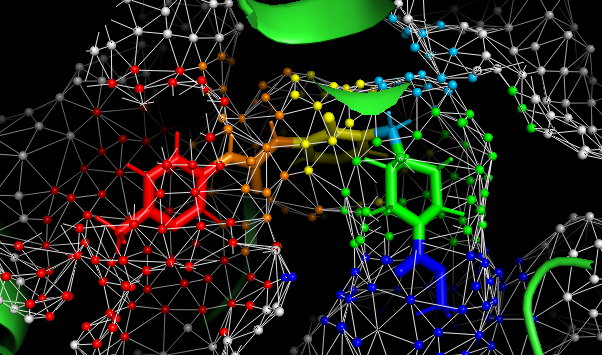
Deep learning for binding site segmentation
PyTorch Molecular dynamics Segmentation #DLPROBSEG

Deep learning for binding site segmentation

A computer vision-based deep learning model that scans putative protein binding sites in molecular dynamics (MD) ensembles to identify conformations compatible with fragment and ligand binding. Stuart’s PhD research at QMUL AIDD.
Related publications:
Yang, Y. Y., Pickersgill, R. W., and Fornili, A.
Journal of Chemical Information and Modeling (JCIM) (2026) DOI: 10.1021/acs.jcim.6c00549
Presentations & Talks:
Oral UKRI/BBSRC AI for Drug Discovery Summer Symposium 2025 (Jun 2025 • London, UK)
Oral Evotec PhD Day 2024 (Oct 2024 • Virtual / Evotec)
Poster QMUL SBBS Postgraduate Research Symposium 2025 (Jun 2025 • London, UK)
Poster Thomas Young Centre (TYC) Postgraduate Student Day 2025 (Jun 2025 • London, UK)
FastEval Parkinsonism
PyTorch Computer vision Ruby on Rails #FASTEVALP

FastEval Parkinsonism

An instant deep learning-assisted online evaluation system for Parkinsonian motor symptoms from home finger-tapping hand videos. Published in npj Digital Medicine (2024).
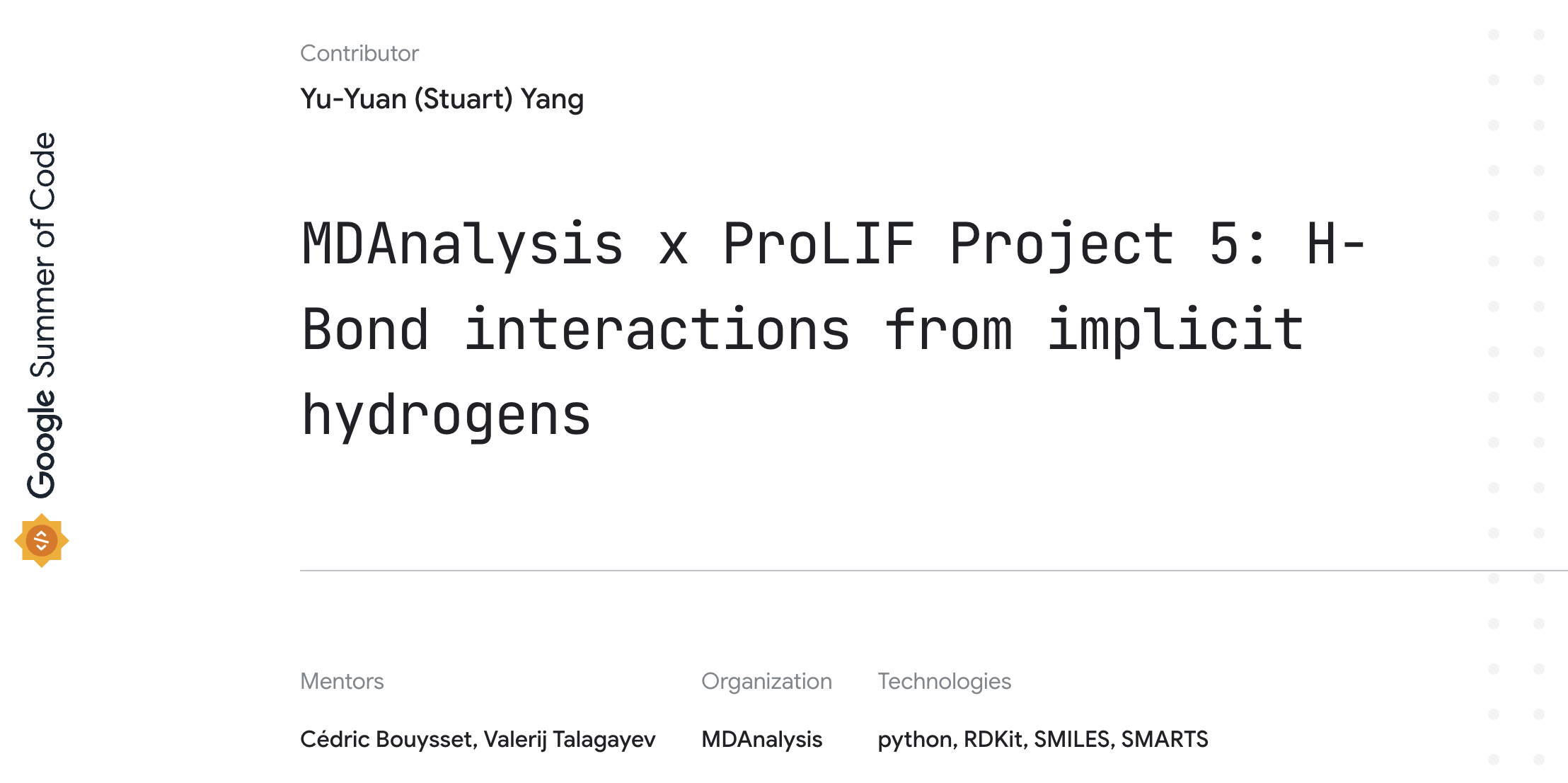
GSoC 2025: implicit H-bonds in ProLIF
ProLIF MDAnalysis RDKit #GSOCMDAPL

GSoC 2025: implicit H-bonds in ProLIF

Detect hydrogen bonds from heavy atoms only, so ProLIF users don’t have to add hydrogens first. Includes a helper that fixes residue names and bond orders.
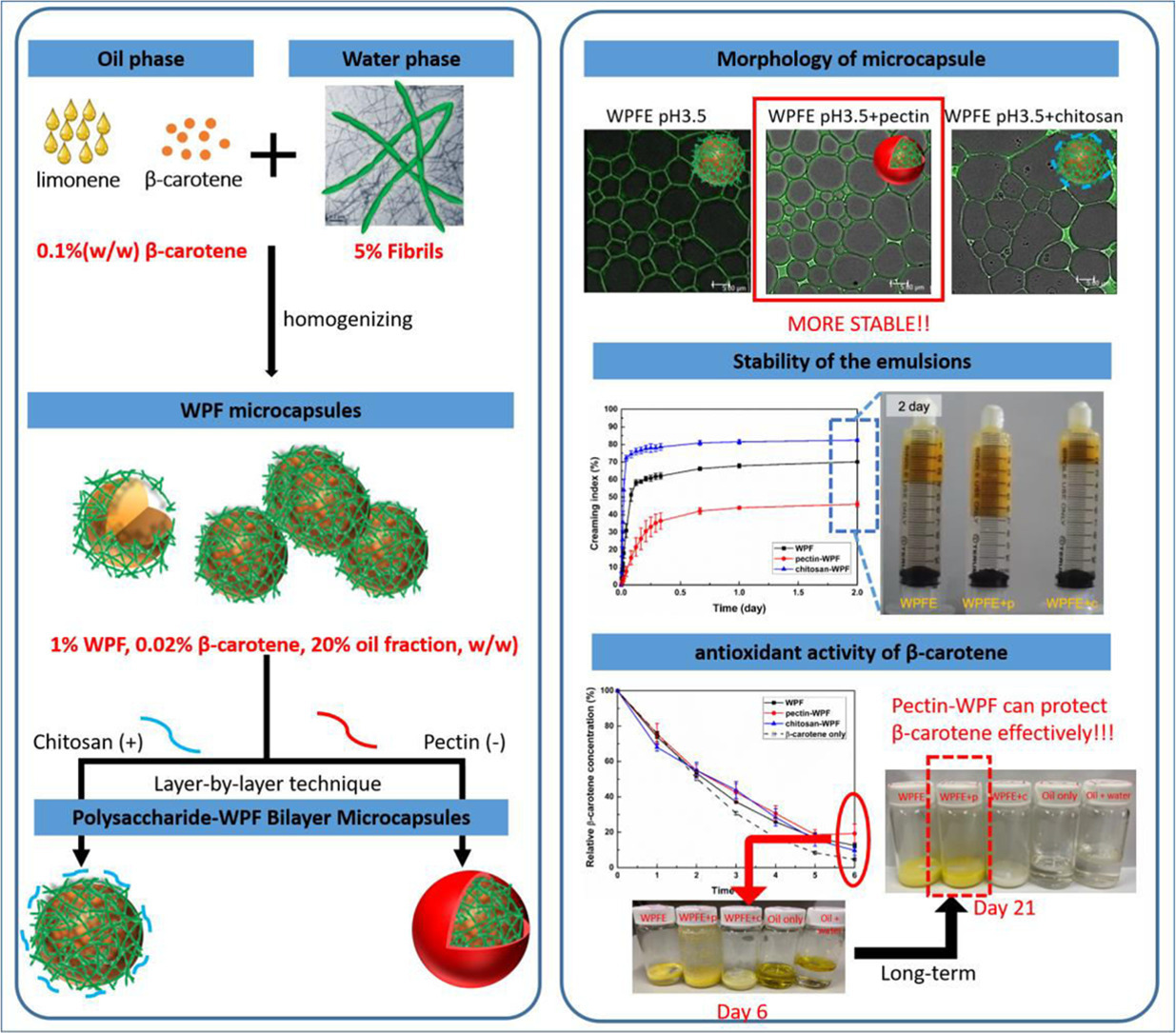
Whey Protein Fibril Microcapsules
Spectroscopy Emulsions Biomaterials #WPIFEMUSL

Whey Protein Fibril Microcapsules

Bilayer microcapsules of whey protein isolate fibrils (WPFs) and pectin engineered to protect acid-sensitive lipophilic nutrients like β-carotene and preserve antioxidant bioavailability. Published in JTICE (2024).
Related publications:
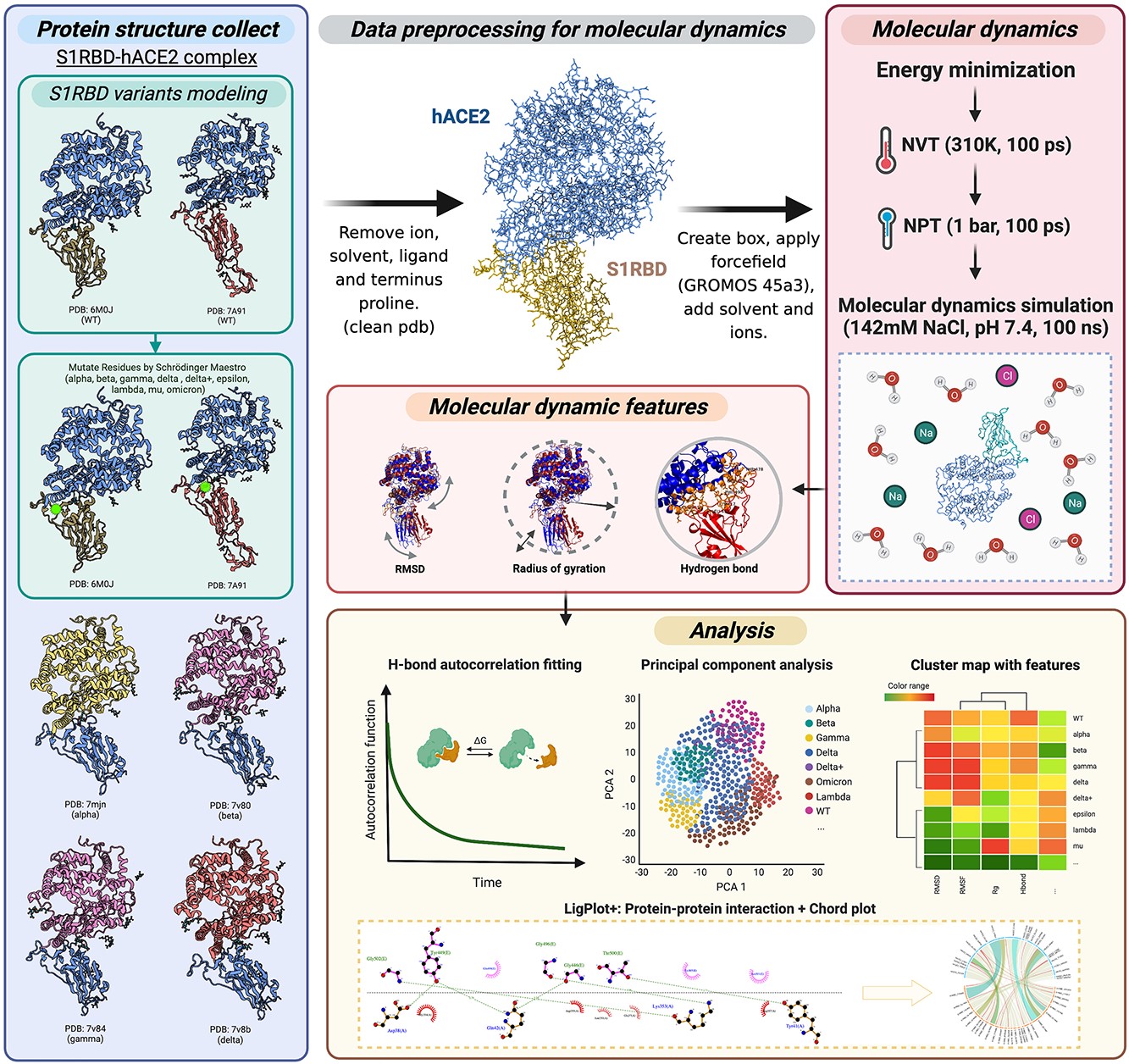
SARS-CoV-2 omicron variants
GROMACS Protein-Protein Interaction #COVIDVARI

SARS-CoV-2 omicron variants

MD simulations of the spike–ACE2 interface: omicron variants form more compact complexes with more hydrogen bonds than earlier variants. Published in Briefings in Functional Genomics (2023).
Presentations & Talks:
Oral American Chemical Society (ACS) Spring 2022 (Mar 2022 • Virtual)
Collaborative Research & Preprints
Preprint • 2026
Architecture of the type II secretion system
Tayebinia, M., Ghanem, N., Zhang, H., Yang, Y. Y., Fornili, A., Shevchik, V., Darbari, V., Pickersgill, R.
bioRxiv • Cryo-EM & Structural Biology
Review • 2023
Recent advances in quantum computing for drug discovery and development
Wang, P. H., Chen J. H., Yang, Y. Y., Lee, C., Tseng, Y. J.
IEEE Nanotechnology Magazine • Quantum CADD
Service, Mentorship & Outreach
Organizer 2024
Conference Organizing Committee
London Biomedical Taiwanese Society (LTBS)
Organized the 18th Interdisciplinary Biomedical Sciences Conference (iBS18) in London, facilitating scientific exchange and community building for biomedical researchers.
Demonstrator 2024
Laboratory Demonstrator & STEM Teaching
Queen Mary University of London (QMUL)
Demonstrated and guided undergraduate and foundation students in CHE209 (Python programming), BIO213 (planarian regeneration experiments), and SEF032 (β-galactosidase enzymology and DNA extraction).
Open Source Contributor 2025
Open-Source Scientific Software Contributor
MDAnalysis & ProLIF (Google Summer of Code)
Contributed implicit hydrogen bond detection and ligand-receptor interaction profiling tools to the open-source biophysical simulation community.